Disclosure: Some links may be affiliate links. This means that I may earn a small commission if you decide to buy (at no additional cost to you)
Last Updated on September 9, 2026 by Erin Donahue
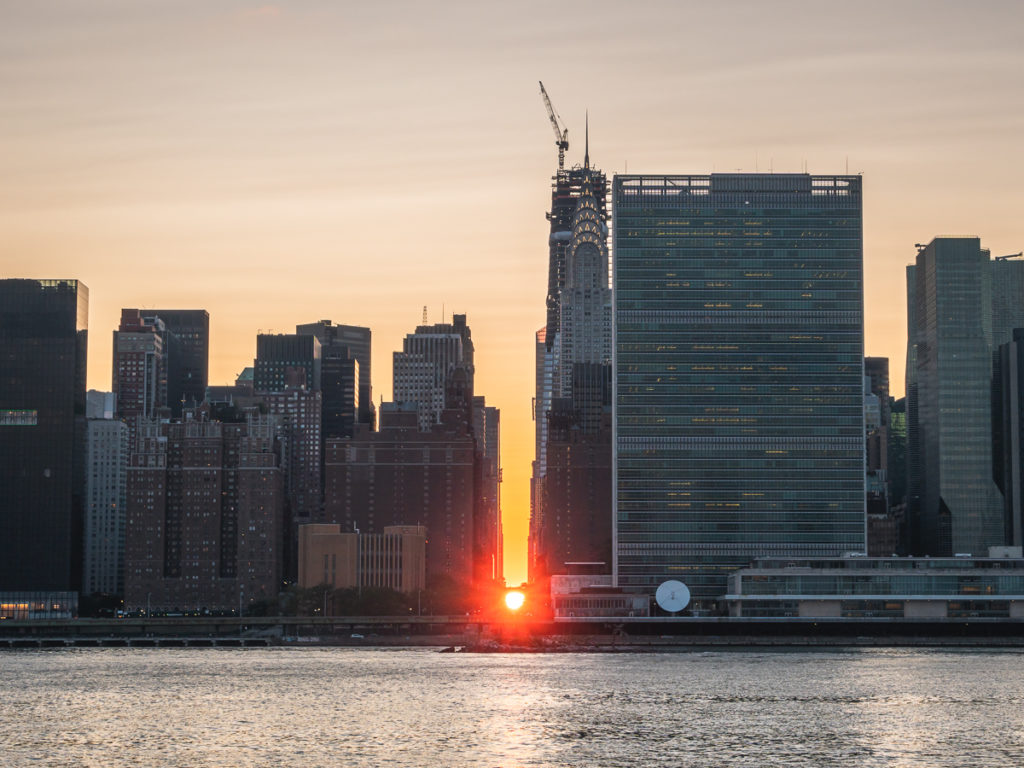
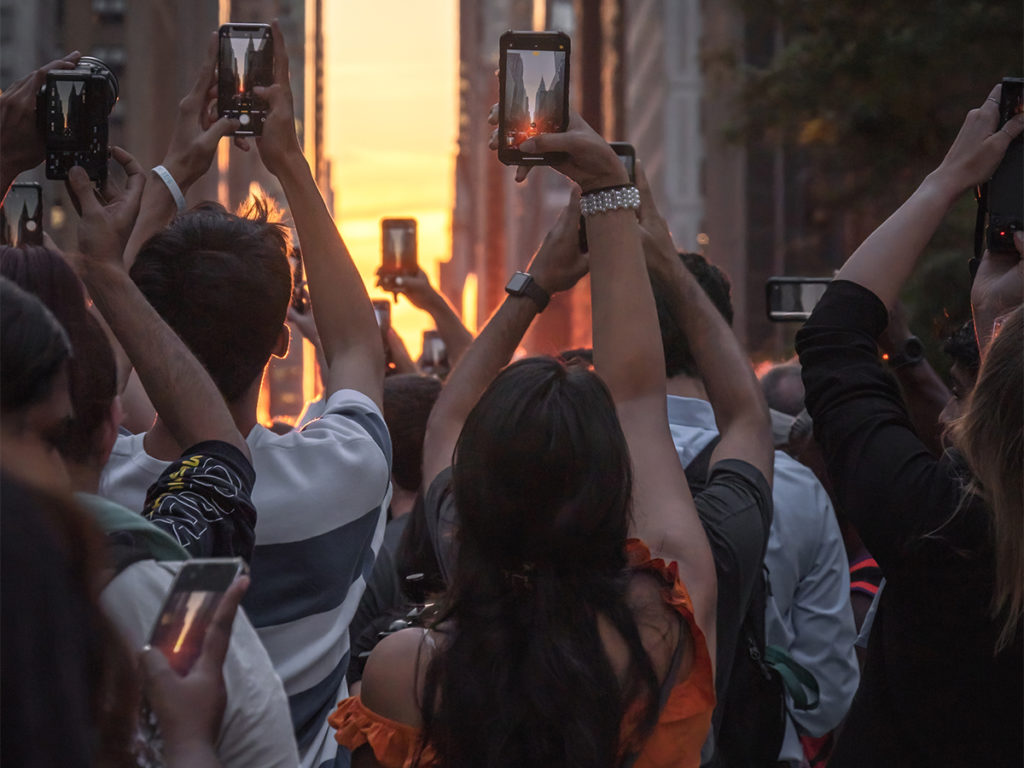
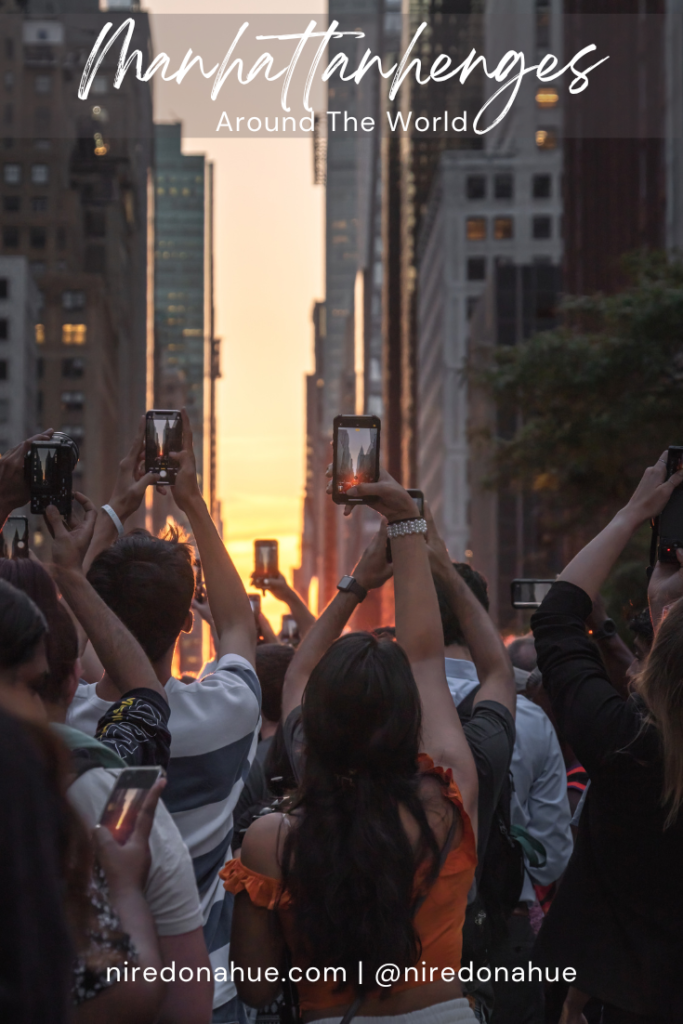
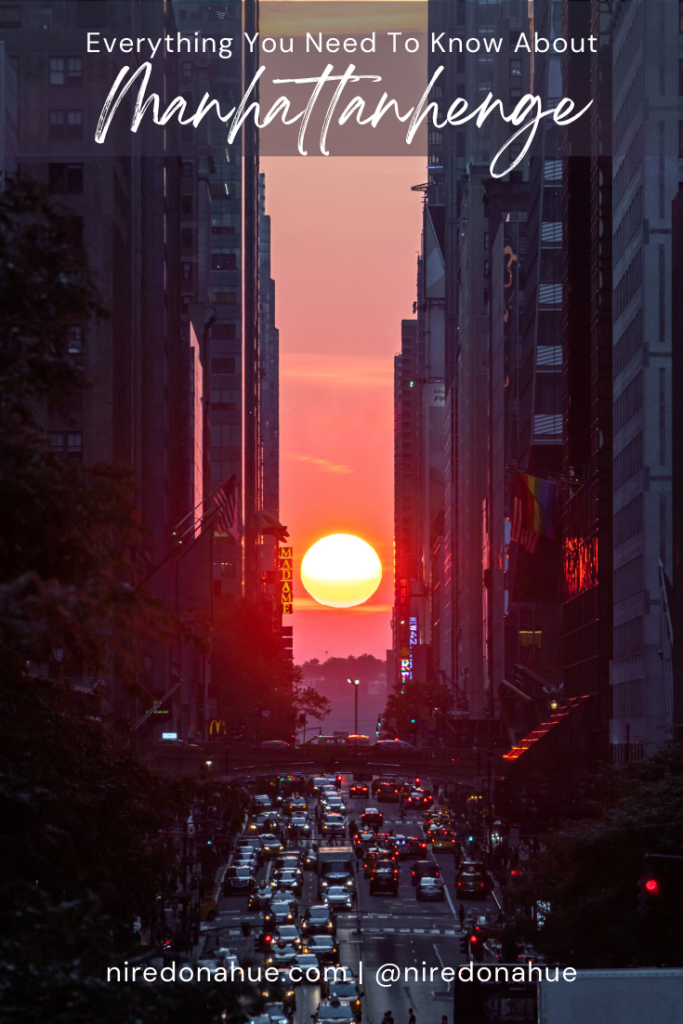
Over the years, you’ve probably seen epic pictures on social media of the sun perfectly centered between New York City skyscrapers with the streets lit up like a corridor of fire. This phenomenon is called Manhattanhenge. Twice a year, the setting sun aligns with Manhattan’s east-west street grid, creating a radiant glow. As a New York City photographer, it’s one of my favorite events to chase in the spring and summer.
Even though I’m not a fan of crowds, I still put up with them to get “the shot”. These days, I actually prefer having people in my Manhattanhenge photos because they help tell the story of the chaos. If you read further down, though, I share a hack for avoiding the crowds. Read on, and I’ll share my hack for avoiding the crowds entirely. After I started posting about Manhattanhenge on social media, people began telling me about other ‘henges’, so I turned this into a running list of solar henges around the world!
Manhattanhenge 2026 Dates & Times
The dates vary each year slightly, but it occurs twice a year, with the first Manhattanhenge usually happening around Memorial Day Weekend and then the second set in mid-July. For 2026, the official Manhattanhenge dates, calculated by the Senior Research Scientist at the American Museum of Natural History, are:
Half Sun on the Grid (half the sun sits below the horizon)
- Thursday, May 28 at 8:14 PM ET
- Sunday, July 12 at 8:21 PM ET
Full Sun on the Grid (the complete solar disk sits just above the horizon)
- Friday, May 29 at 8:13 PM ET
- Saturday, July 11 at 8:20 PM ET
Best Spots To See and Photograph Manhattanhenge in 2026
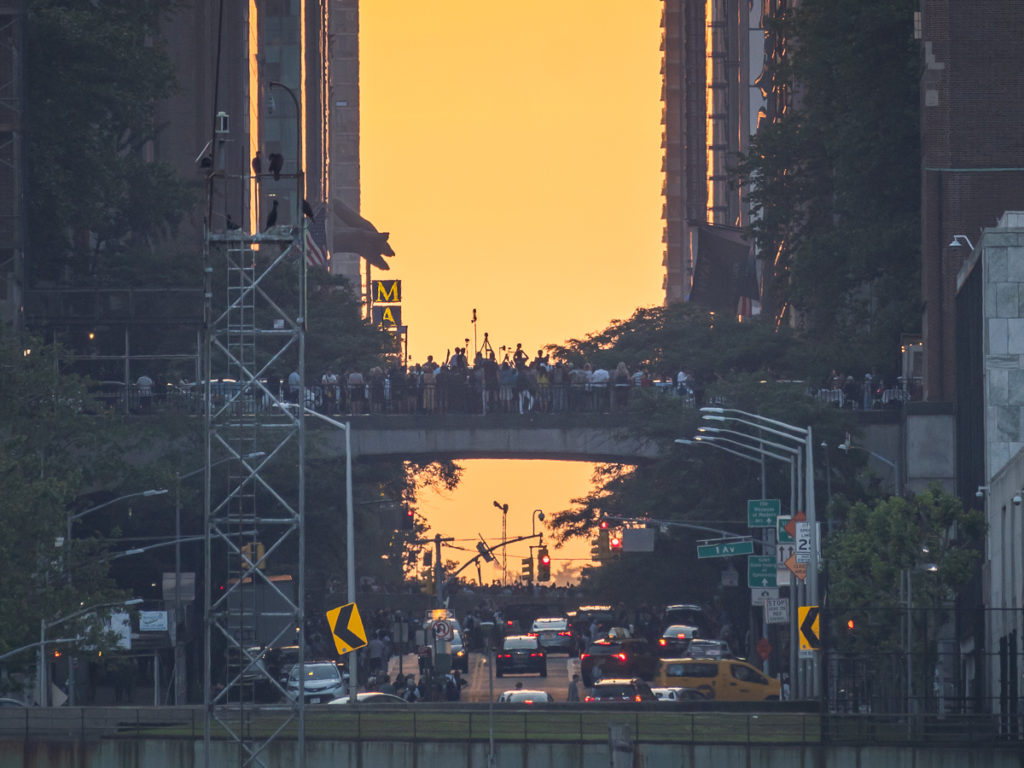
Since Manhattanhenge happens at sunset, it’s necessary to stand east-facing west. The further east, the better the viewing opportunity. For the best wide-open view down the grid, head to one of the two-way cross streets: 14th, 34th, 42nd, or 57th Street.
Tudor City Overpass at 42nd St. and First Ave. draws the biggest crowd. The elevated bridge gives you an unobstructed line with the Chrysler Building and One Vanderbilt. My personal favorite, though, is Gantry Plaza State Park in Long Island City, because you get the full Manhattan skyline included in your frame. If you want to get ‘the shot,’ you should get to your shooting location a few hours early to stake your spot. Some people show up 10 to 12 hours ahead on henge days. I’m not exaggerating. It’s quite dumb, actually, because once you know the hack I share further down, you won’t need to fight for a spot at all. Be prepared for crowds everywhere on the streets, though, especially at the Tudor City Overpass. Everyone acts like animals when it’s a clear day, and the sun is setting!
The History of Manhattanhenge
“Henge” describes an enclosure, and the first henge was Stonehenge in the UK. While Stonehenge derived its name from its physical setup, it’s also the OG of such a phenomenon with something man-made. The sun aligns with the monument during the summer and winter solstices. The most famous moment occurs at the summer solstice sunrise when the sun rises directly over the Heel Stone and shines into the center of the monument. The main axis also frames the winter solstice sunset. Built between 3000 and 1500 BCE, this ancient astronomical calendar continues to bring visitors from around the world.
It’s from there that American astrophysicist Neil deGrasse Tyson drew on that legacy when he identified that the sun systematically sets exactly along the Manhattan grid every May and July. Watch the video above for a deeper explanation.
What Is the Manhattanhenge Effect?
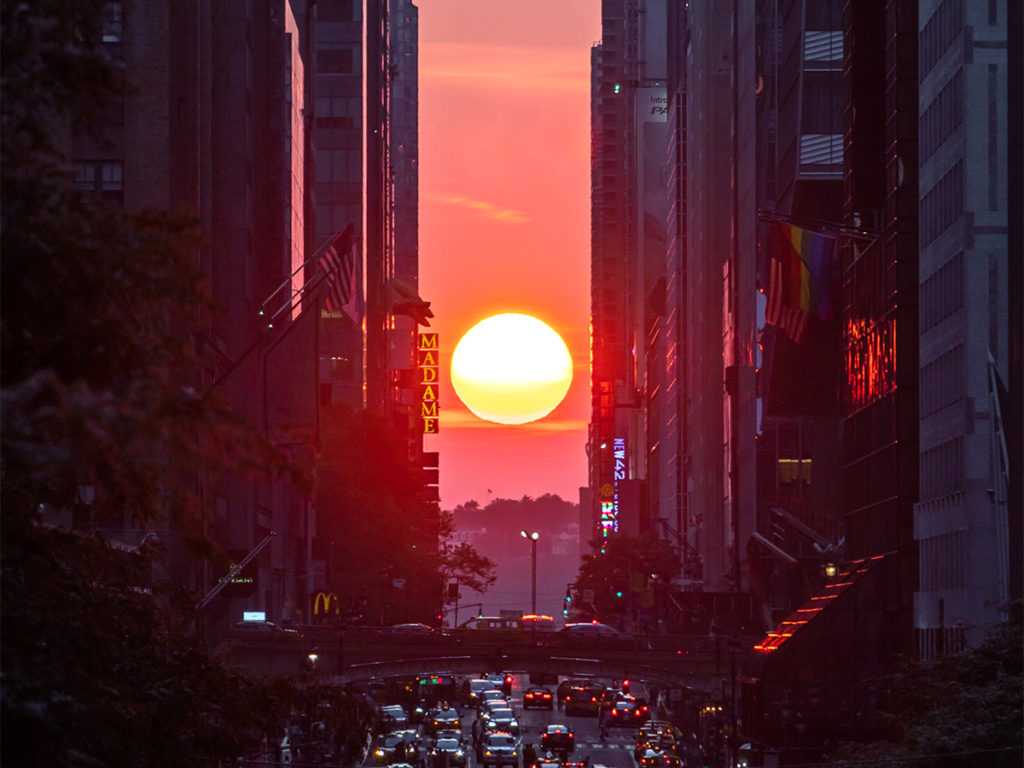
Here’s something most people don’t realize, and it’s exactly why the chaos on the official dates is textbook sheep mentality. If you miss the official dates, you haven’t actually missed anything. Between the two sets of Manhattanhenge dates, from late May through mid-July, the sun sits low enough in the sky to appear within the city grid even on non-Manhattanhenge days. Last I checked, Earth’s orbit doesn’t move that quickly.
The American Museum of Natural History calls this the Manhattanhenge Effect. Technically, the alignment isn’t as precise, but literally no one will be able to tell a difference. More importantly, the crowds are gone. This is my preferred window to photograph the sun between the buildings because it actually looks better slightly higher above the horizon.
What Is Reverse Manhattanhenge?
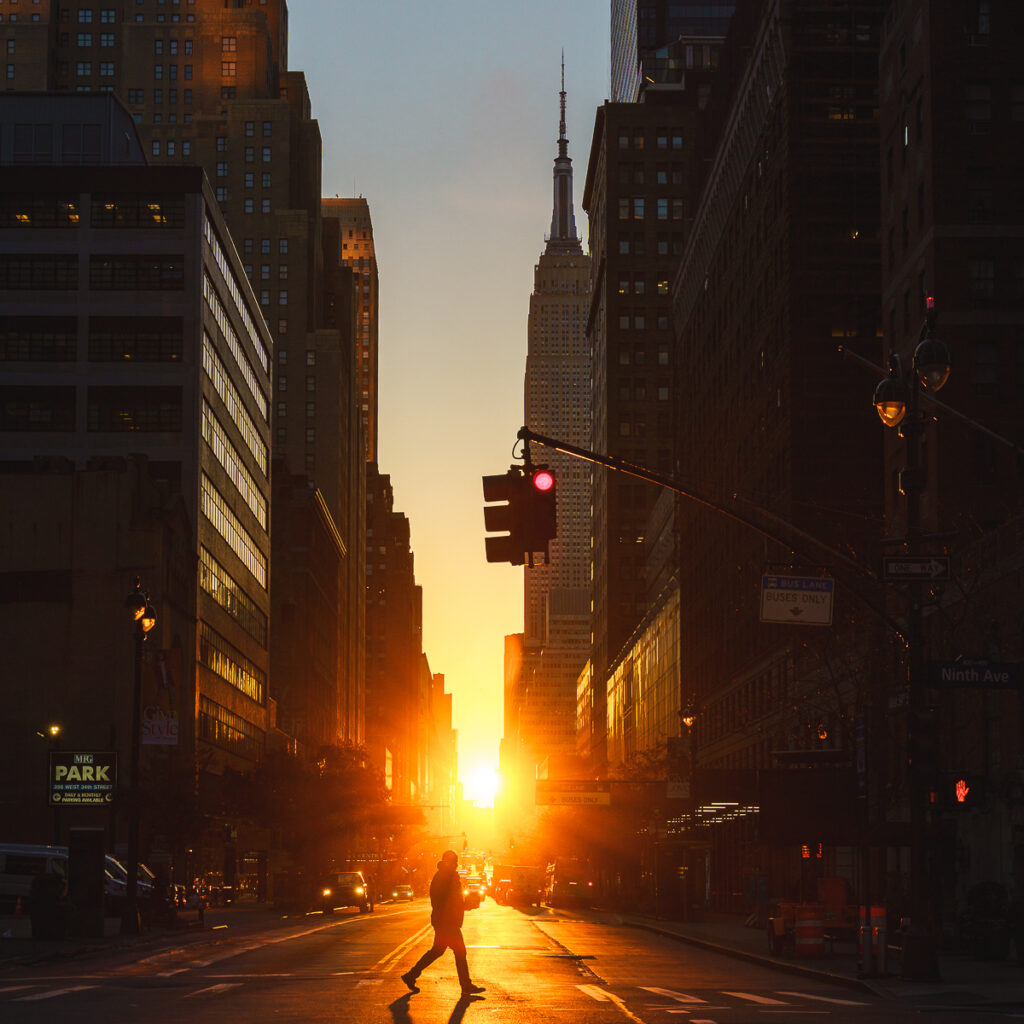
Another hack to avoid the insane crowds is Reverse Manhattanhenge, a lesser-known phenomenon that most people don’t even know occurs. Instead of a sunset, it’s a sunrise alignment, and instead of May and July, it happens in January and November. You stand as far west as possible, or head to Weehawken, NJ, and look east down 42nd Street.
The trade-off is that the weather is usually brick AF, especially the January one, but you have the scene almost entirely to yourself. Although the morning commuters might question what you’re doing, standing in the middle of the street. If you want to avoid the chill, Kaohsiunghenge is happening during the same months, but at sunset on the literal opposite side of the world in Taiwan.
Other Manhattanhenges Around The World
Believe it or not, this phenomenon is not unique to New York City! With the availability of planning apps like PhotoPills and PlanIt, alignments with landmarks are easy to map anywhere in the world. It’s always exciting to see the literal ball of sun so close through a manmade construct! I’m making it my mission to compile a running list of sun henges around the world — here’s the running list.
Henges in the United States
Chicagohenge
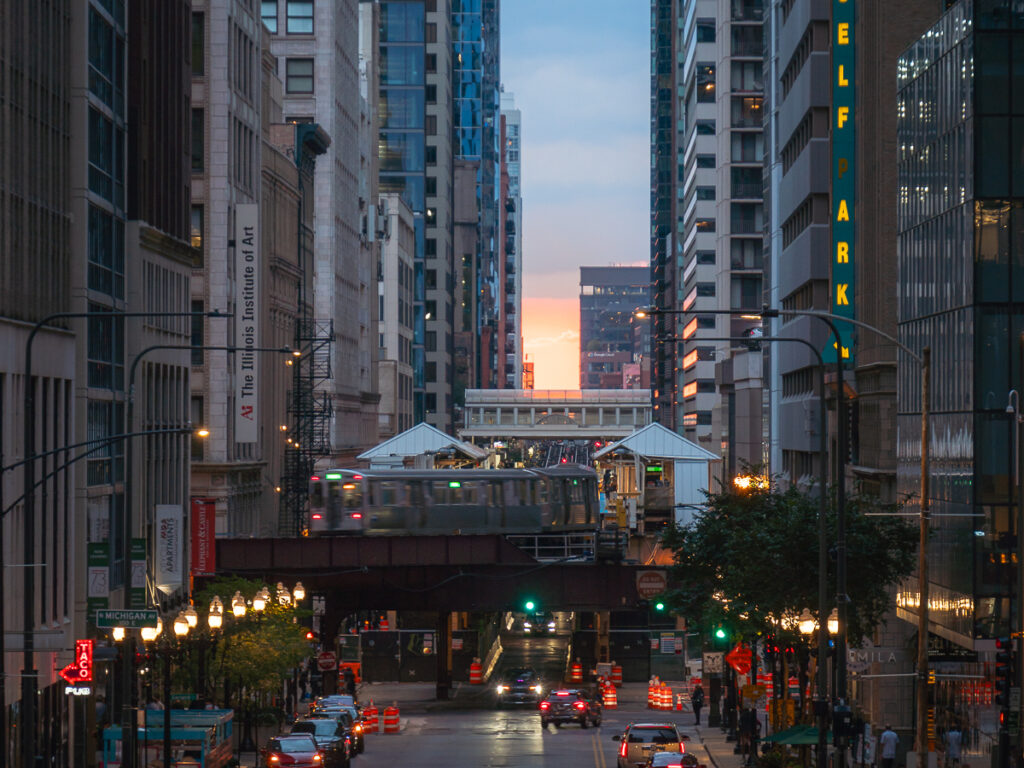
The Windy City’s solar alignment happens during the spring equinox in late March. Unlike New York City, where the henges for sunrise and sunset are spread throughout the year, Chicagohenge’s sunrise and sunset both happen on the same day. While the main event is in March, there’s a second chance to see it in September during the (you guessed it) autumn equinox.
Best viewing spots: W Randolph St & N Halsted St, W Madison St & N Wells St, W Adams St & N Wacker Dr.
Scrippshenge (California)
This spectacle in San Diego occurs twice a year in early May and early-mid August, when the setting sun dips toward the horizon and aligns perfectly between the support beams of the Scripps Pier in La Jolla.
California Henge (San Francisco)
Another California sun alignment in San Francisco, but during April and September. Find a spot to photograph the sun from the Bay Bridge and California Street.
International Manhattanhenges
Stonehenge (England)
As mentioned above, this was the OG of this phenomenon. The sun rises behind the Heel Stone during the summer and winter equinoxes and brings in tourists from everywhere to witness.
Kaohsiunghenge (Taiwan)
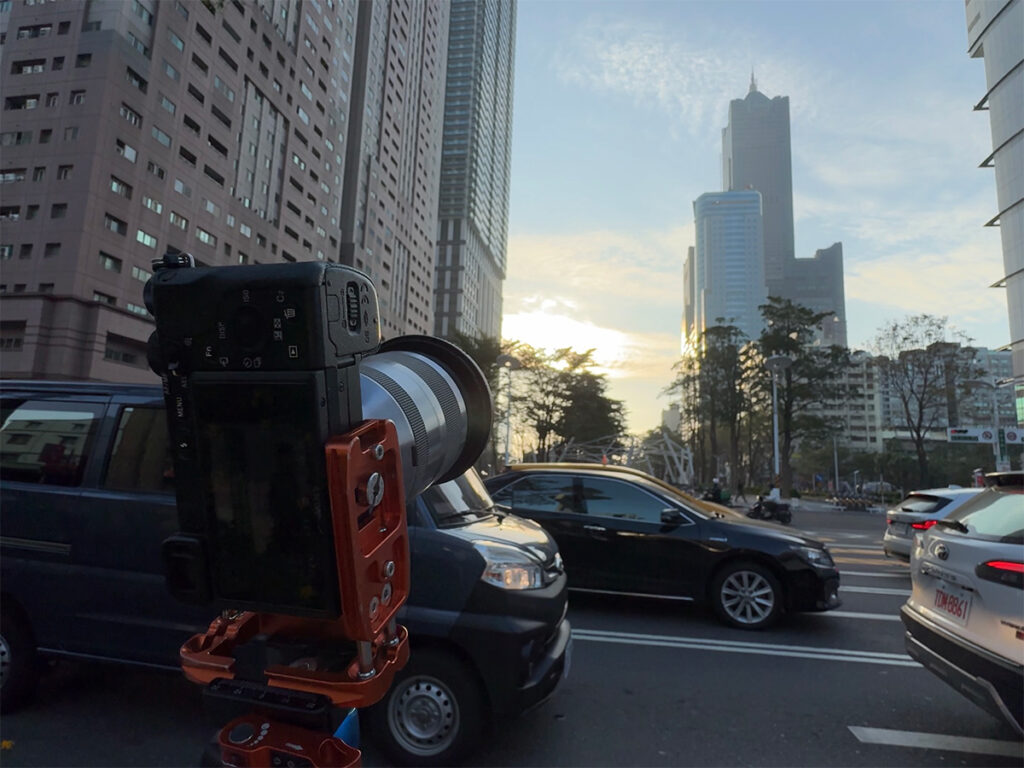
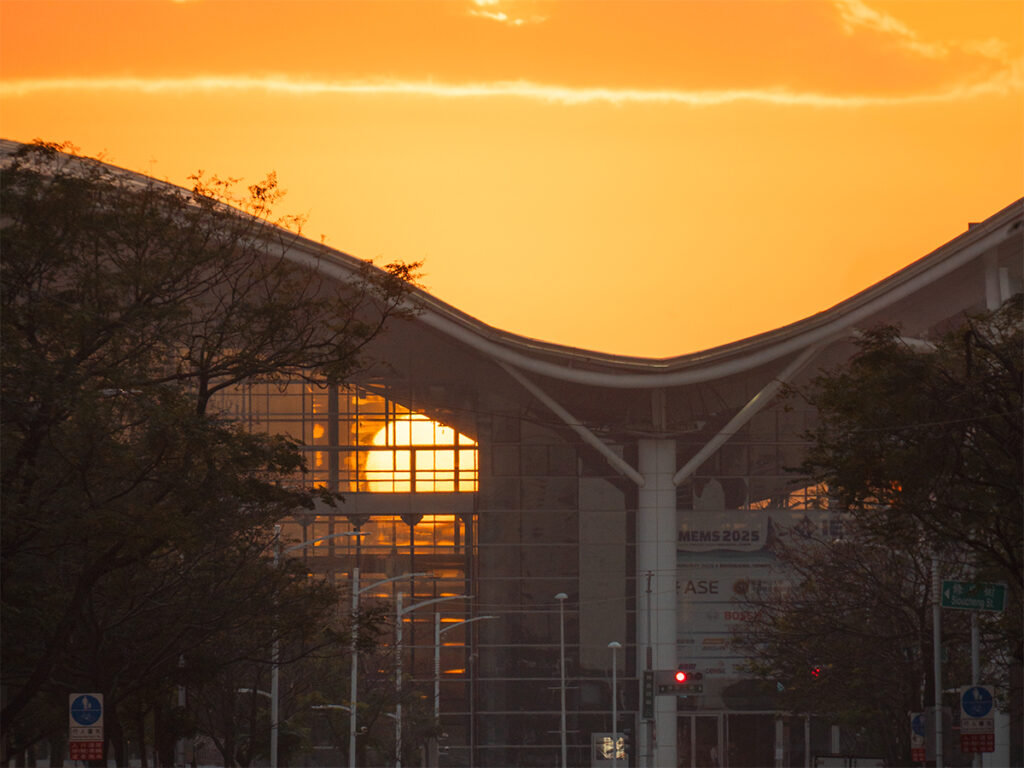
One of Taiwan’s largest cities, Kaohsiung, has a similar grid structure to Manhattan, and its alignment runs from November to January — the same months as Reverse Manhattanhenge, but at sunset instead of sunrise. While it’s freezing in New York, Kaohsiung is glowing and balmy. If you want warmer weather and a later day, book that flight to Taiwan!
The city government used to promote this as a tourism event and even closed off streets to traffic for safer viewing, though I haven’t seen an update since 2020. If you want warmer weather and a later day, book that flight to Taiwan! I have a dedicated guide to photographing Kaohsiunghenge if you want the full breakdown.
Palermohenge (Sicily)
During the spring equinox, the sun rises along the axis of Corso Calatafimi in Palermo.
Luxorhenge (Egypt)
Every December 22 at winter solstice sunrise, the sun aligns with the central axis of the Temple of Karnak in southern Egypt, illuminating the inner sanctum of a complex once devoted to the god Amun.
Torontohenge (Canada)
One of the best times to catch Torontohenge is Valentine’s Day, February 14, when the half-sun lines up with Toronto’s downtown corridor. The half-sun holds above the horizon for about a week before the position shifts. A second window happens around October 25. Like Manhattanhenge, Toronto also has reverse sunrise alignments — typically around April 19 and August 23.
Camera Gear & Settings For Sun Photography
These are recommended settings to start with when photographing the sun. As always, experiment on your own depending on the environment and lighting conditions. Also, since you’re dealing with the literal sun, DO NOT look directly into it!!
- Aperture: f/8-f/11
- Shutter speed: 1/250+
- ISO: 100
- ND Filters & Tripods: optional but useful
Read about the camera gear I use to photograph the sun, or browse my storefront on Amazon.
FAQ’s About Manhattanhenge
What is Manhattanhenge?
Manhattanhenge is the moment when the setting sun lines up with Manhattan’s east-west street grid and glows between the buildings.
When is Manhattanhenge in 2026?
In 2026, Manhattanhenge falls on May 28, May 29, July 11, and July 12.
Why does Manhattanhenge happen twice a year?
It happens twice because the sun’s position shifts through the year, so it only matches Manhattan’s grid on a few days in late spring and midsummer.
Where is the best place to see Manhattanhenge?
The best viewing streets are 14th, 23rd, 34th, 42nd, and 57th Streets, with Tudor City Overpass and Hunter’s Point South Park also being strong spots.
What is Reverse Manhattanhenge?
Reverse Manhattanhenge is the sunrise version of the phenomenon, when the sun lines up with Manhattan’s grid in winter instead of at sunset in the summer.
Pin this post!

Comments +