Disclosure: Some links may be affiliate links. This means that I may earn a small commission if you decide to buy (at no additional cost to you)
Last Updated on March 13, 2026 by Erin Donahue
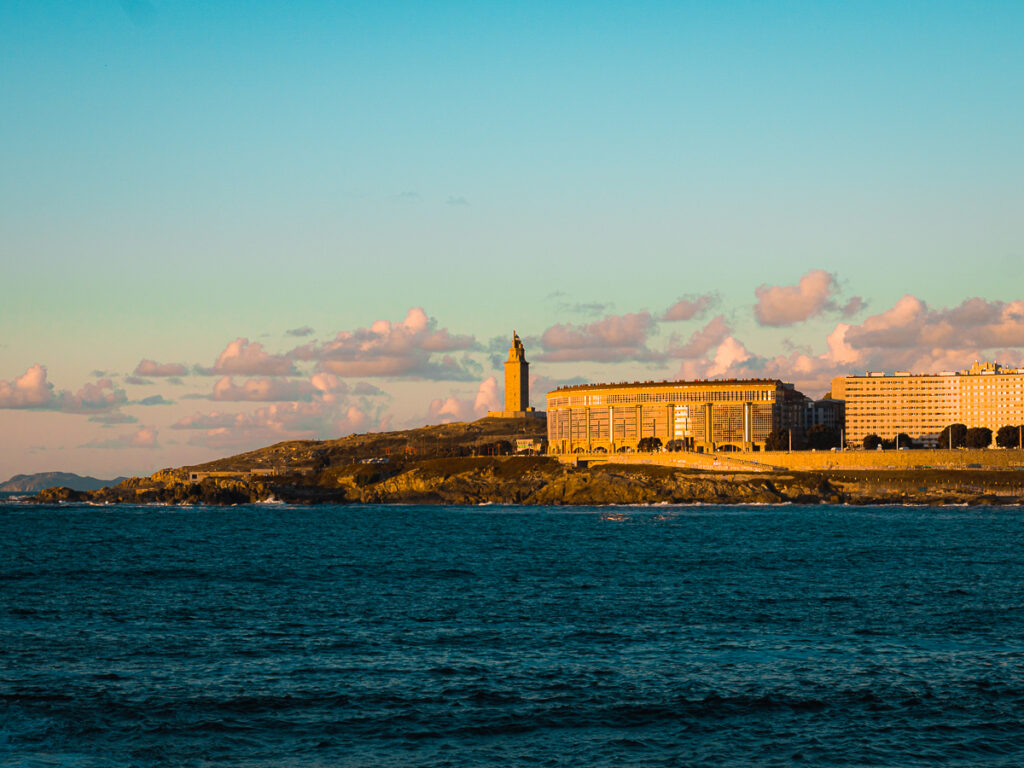
Spain is only a six-hour flight from New York City, and A Coruña sits at the very top of Galicia. It’s a coastal city that most Americans probably never heard of and fly straight over on the way to Madrid. I stopped here for 24 hours before starting my pilgrimage on the Camino de Santiago, the Camino Inglés route. September is shoulder season in Galicia, where temperatures are mild and comfortable. However, it’s one of the wettest regions in Spain, so rain is part of the deal no matter when you visit. It rained most of the time I was there.
If you’re planning the Camino Inglés and wondering whether A Coruña is worth a night on your itinerary, this is for you.
Does the Camino Inglés start in A Coruña?

In medieval times, pilgrims from Ireland, the UK, and Scandinavia crossed the sea and landed at the Galician ports of Ferrol and A Coruña before making their way inland to Santiago de Compostela. Both cities remain traditional gateways to the Camino Inglés today, but they serve different purposes depending on what you’re after.
A Coruña, called the Celtic Camino, is a shorter alternative at 75km. It doesn’t meet the Compostela requirement on its own — unless you’ve already walked a recognized connecting route like the Kerry Camino in Ireland, Scotland, or Wales, which can be combined with the A Coruña start to qualify. Ferrol is the official starting point because at 119 km, it comfortably clears the 100km minimum required to earn your Compostela certificate.
I chose to spend the night in A Coruña first, then took the bus to Ferrol the next morning to start the walk properly. It’s about an hour by bus and costs around 10 euros.
How to get to A Coruña in Spain
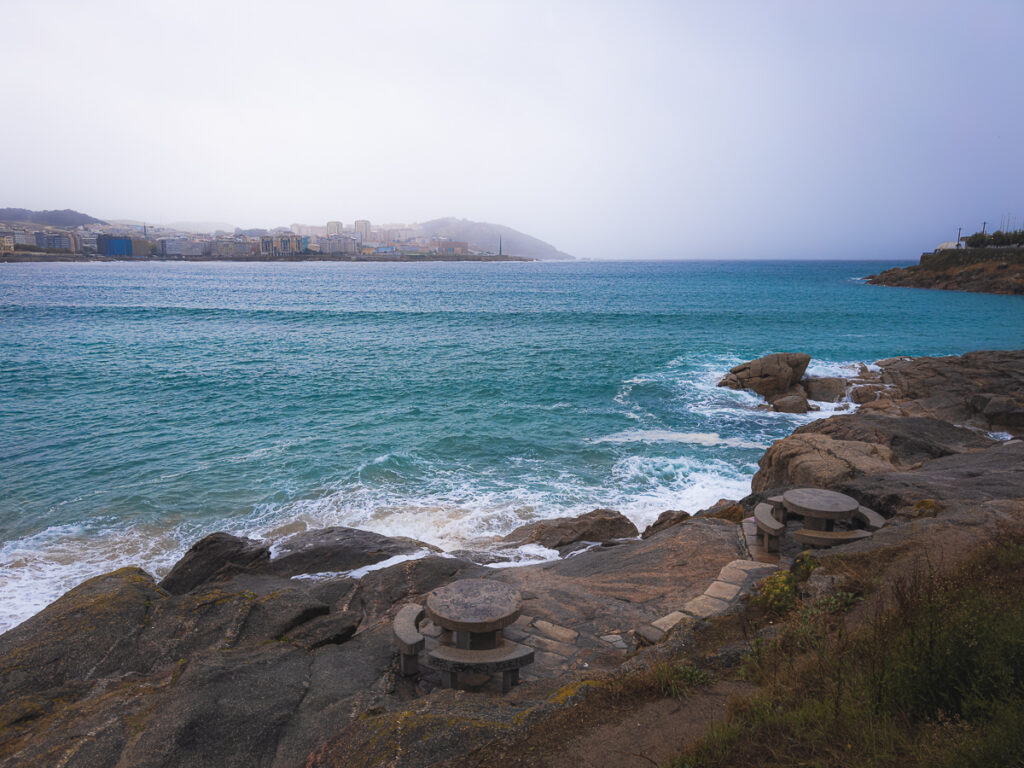
Galicia has two airports you can fly into: A Coruña (LCG) and Santiago de Compostela (SCQ), about 45 minutes apart by bus or train. When I first visited, I flew directly into A Coruña from London’s Gatwick Airport (LGW). Returning the following year around the same time, and from London again, direct flights weren’t available, so I’m flying into Santiago de Compostela (SCQ) instead and taking the bus or train over. It’s a straightforward connection and adds under an hour to your journey. It’s worth checking both airports when you book, though, since availability can vary by season.
If you’re flying directly into A Coruña, take the A4 bus from the airport into town — it accepts tap to pay, so no need for cash, but there’s an ATM onsite. Ask the driver for the Alfonso Molina stop, or the Plaza de Ourense stop if you’re staying near the beach area. The whole ride takes about 20 minutes.
From the US, you’ll likely connect through Madrid first, then catch a short domestic flight or the Renfe train up to A Coruña. If you’re flying with Iberia and short on time, check whether their stopover program covers Madrid as an intermediate stop before continuing to A Coruña as your final destination. Otherwise, just take the train.
Starting May 2026, United Airlines is launching the first nonstop flight from Newark (EWR) to Santiago de Compostela, operating three times a week. If you’re based in New York, that opens up a direct routing into Galicia worth keeping an eye on.
What Is A Coruña Like as a Visitor?
A Coruña is urban and coastal at the same time, kind of like San Diego in California. The seafront stretches along a promenade that locals use no matter the weather. You can find runners, cyclists, and people walking dogs in the rain. There’s a university here, so the city skews young, and this is the hometown of Zara. The Inditex headquarters is here.
The seafront houses with their white glass-enclosed balconies, called Galerias, are one of the most distinctive things about the city. They line the harbor like a wall of windows, built to let residents watch the port activity without getting soaked.
Things to do in A Coruña with only 24 hours
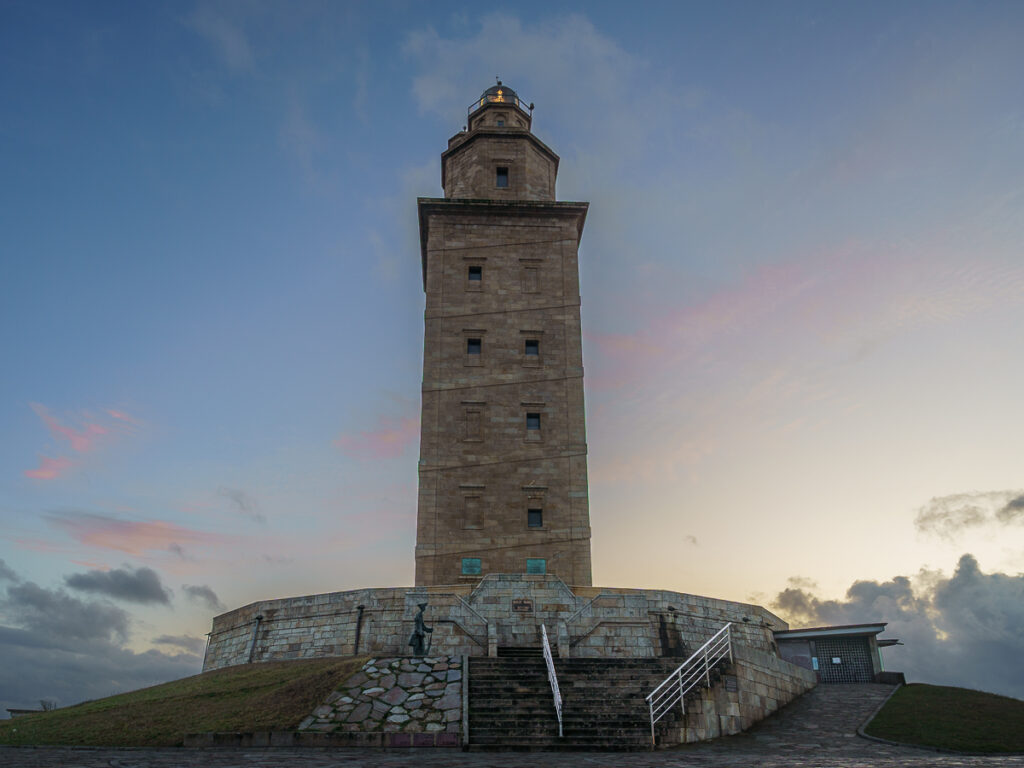
With one full day, prioritize the Torre de Hércules. Built in the 1st century AD, it’s the only fully preserved Roman lighthouse still functioning as a marine signal anywhere in the world. Recognized as a UNESCO World Heritage Site, it sits on a dramatic coastal headland about a mile and a half from the city center.
I’ll be honest, I almost didn’t go. It rained on and off the one day I had, and I spent nearly an hour sheltering under awnings and trees, debating whether to turn back. Then, just as I was heading home, the clouds broke. I turned right around and made it to the tower with an hour to spare. The sky went golden, the wet stone caught the light, and the horizon from Rosa dos Ventos looked like a cinematic postcard. This is exactly why you go for the shot even when the weather looks questionable.
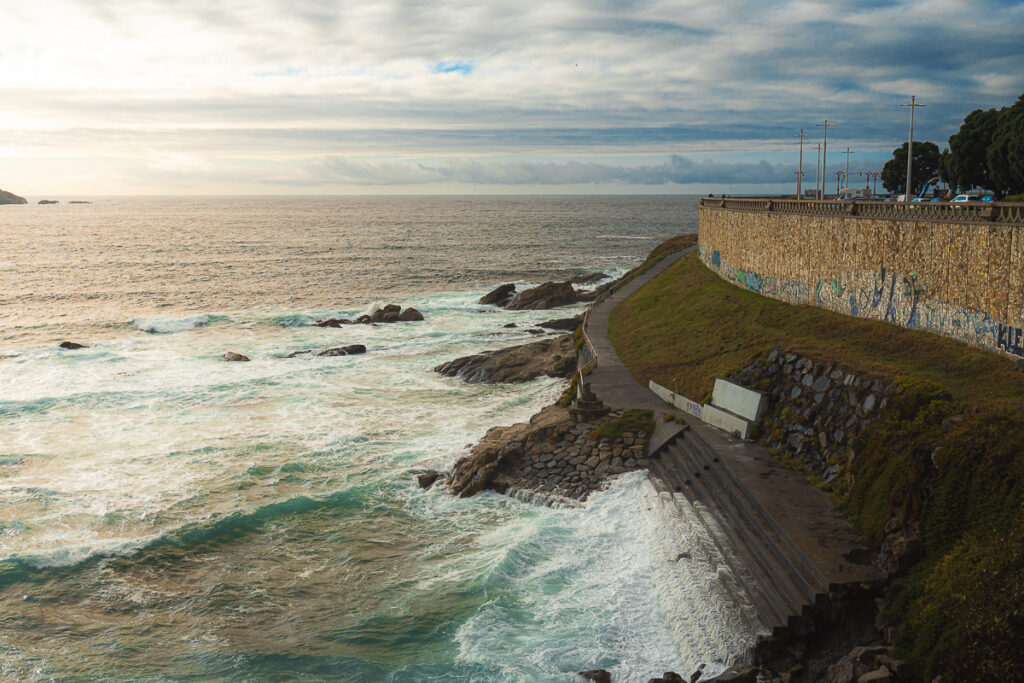
The promenade along the seafront is worth your time, too. One of the longest urban coastal walkways in Europe, even a short stretch gives you a real feel for how locals actually use the city — runners, cyclists, people walking dogs, regardless of the weather.
Where to Stay in A Coruña Before Hiking the Camino de Santiago
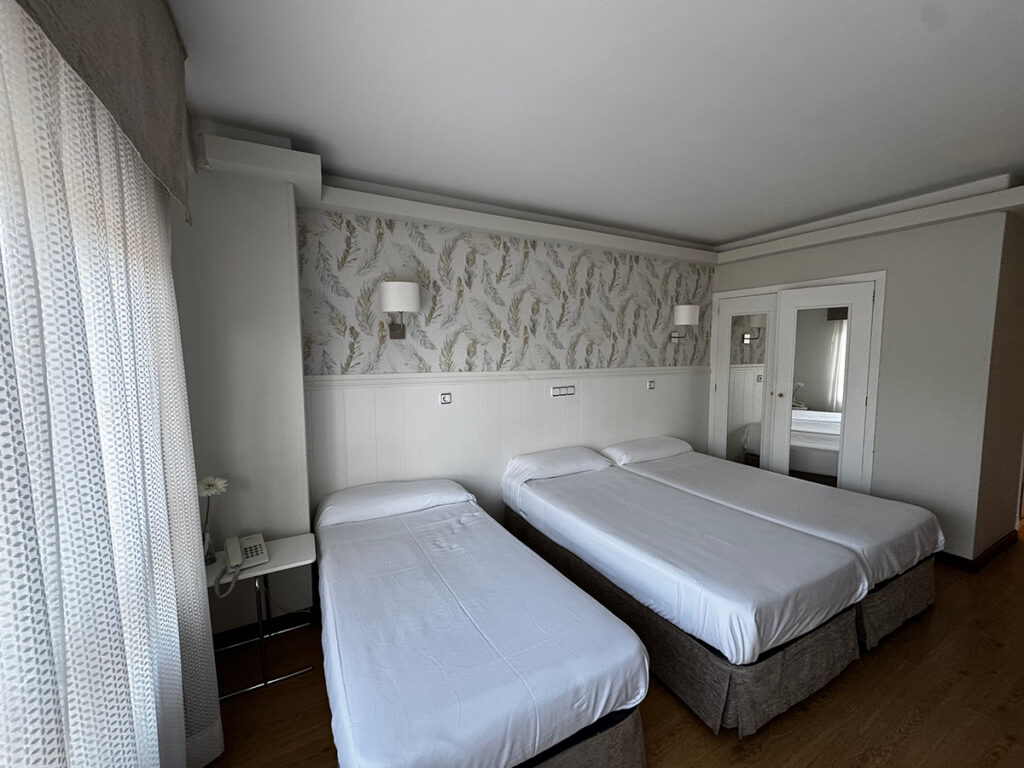
I stayed at Hotel Almirante in A Coruña before starting the Camino Inglés. It’s right on the beach, and I paid about 70 euros a night. Sheets and towels were provided. However, no hairdryer, which I didn’t realize was an amenity in budget Spanish accommodations. It’s fine for one or two nights when the weather is still warm, but I’d recommend staying closer to the heart of town.
A few other options worth considering:
- Hotel Brisa comes with free breakfast and sits closer to the center. It was fully booked when I checked, but it was the first one recommended to me.
- Mar de Plata Hotel, on the same block as Almirante, looks nice from the outside, but is significantly more expensive than Hotel Almirante.
- AC Hotel A Coruña If you want something more central. It puts you within walking distance of everything, and they definitely provide hair dryers.
What to Eat in A Coruña
If you eat one thing in Galicia, make it the tortilla. This is a thick, dense potato and egg omelet that the region is famous for. Every Camino forum recommends it. When I was on the way back from the Torre de Hércules, I ducked into a random bar and ordered one without knowing what I was getting. It was the only one I had the entire trip. Beyond the tortilla, A Coruña is known for its seafood. The old town has a cluster of tapas bars worth wandering through for dinner.
Is A Coruña Worth It Before Starting the Camino Inglés?
A Coruña never would have landed on my radar without the Camino. That’s probably true for most Americans, too. If you get to go, spend some time exploring, but don’t expect perfect weather.
Protect Your Trip to Spain With Travel Insurance
Before you book your Camino de Santiago Trip, protect yourself against flight delays, lost luggage, and medical emergencies. You can purchase it even after your trip has started! I use SafetyWing for all my European travel because it covers:
- flight delays and cancellations
- Lost or delayed luggage
- Medical emergencies abroad
- Adventure activities coverage
FAQs about A Coruña before Camino Inglés
Is A Coruña worth visiting?
Yes, especially if you’re already traveling to Galicia for the Camino Inglés. It’s one of Spain’s most underrated coastal cities and a natural stopover before starting the walk from Ferrol.
What is the weather like in A Coruña?
Expect rain, especially in September and October. Galicia is one of the wettest regions in Spain. Shoulder season temperatures are mild and comfortable for walking, but bring a waterproof layer regardless of the forecast.
Does A Coruña have an old town?
The old town sits on a peninsula and is walkable from most hotels. It’s where you’ll find the best tapas bars, the city’s historic architecture, and the medieval street layout that gives A Coruña its character.
What language do people speak in A Coruña?
Both Spanish and Galician which is a distinct regional language closer to Portuguese than Castilian Spanish. Most locals speak both. English is understood in tourist areas, but don’t count on it everywhere.
What is A Coruña famous for?
The Torre de Hércules is the only fully preserved Roman lighthouse still functioning in the world. A Coruña is also the hometown of Zara and the Inditex fashion group. It’s also known regionally for its seafood, particularly pulpo.

Comments +