Experiencing Medical & Wellness Tourism in Taiwan as a Foreigner
Disclosure: Some links may be affiliate links. This means that I may earn a small commission if you decide to buy (at no additional cost to you)
Last Updated on January 13, 2026 by Erin Donahue
There’s nothing more frustrating than the US healthcare system, and I know I’m not alone in this. As I grow older, I’ve become more and more obsessed with medical tourism. It’s no secret that healthcare in the US is straight-up dooky, and I’ve become increasingly disillusioned.
My first experience with medical tourism in Taiwan was a comprehensive physical, which showed me how different preventative care can look outside the U.S. After I shared my experience, it drew attention from news outlets and publications covering the growing conversation around Americans seeking care abroad.
On a later trip, I returned for more in-depth GI screenings, including a colonoscopy and endoscopy, to establish a baseline for myself. In the U.S., routine screenings like these don’t typically start until age 50, despite rising rates of colon cancer among younger adults. Even with the recent shift to start screenings at age 45, that’s still so far away.
Most recently, I’ve continued with dermatology and wellness-focused care, like red light therapy. I’ve also written about my beauty tourism experience in Korea, which sits alongside these trips as part of how I get access to healthcare and cosmetic procedures while traveling.
Why I Travel to Taiwan for Medical Care
Taiwan is my second home, and I’ve been visiting almost every year since I was born. What many people might not know is that global health organizations consistently rank Taiwan’s healthcare system as one of the best in the world. When I was younger, I only encountered Taiwan’s healthcare system during emergencies. Now, as an adult, I plan trips intentionally around preventative care there. Not because Taiwan markets itself as a medical tourism destination, but because the system is efficient, transparent, and treats preventative health as a given rather than a luxury.
I want to make it clear that Taiwan is not typically known as a medical tourism destination, and I’m not trying to convince you to come for it, quite frankly. I’m sharing this to highlight the stark differences and how the U.S. doesn’t take care of its citizens the way other developed nations do.
Navigating Medical Tourism in Taiwan as a Foreigner
Taiwanese citizens are covered under a universal healthcare system, but as a foreigner, I paid entirely out of pocket and went to a private clinic in Hsinchu. They’re a large hospital system, but I specifically went for their concierge services. When I shared my experience online, I got flooded with questions asking for clinic recommendations. The reality is that unless you’re fluent in Mandarin, this particular clinic is not for you. While many doctors speak English, Mandarin is strongly preferred, and translation services aren’t provided.
For most foreigners considering medical tourism in Taiwan, clinics in Taipei are a safer starting point. As the capital, it’s more likely you’ll find facilities accustomed to international travelers.
What a Comprehensive Physical in Taiwan Was Like
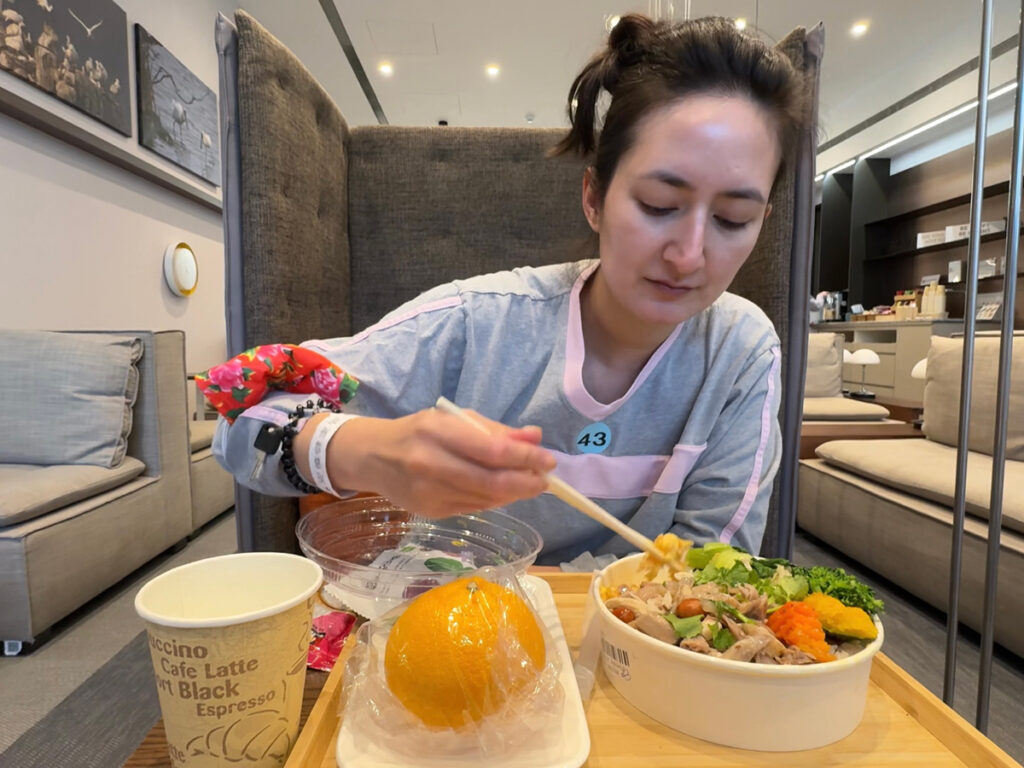
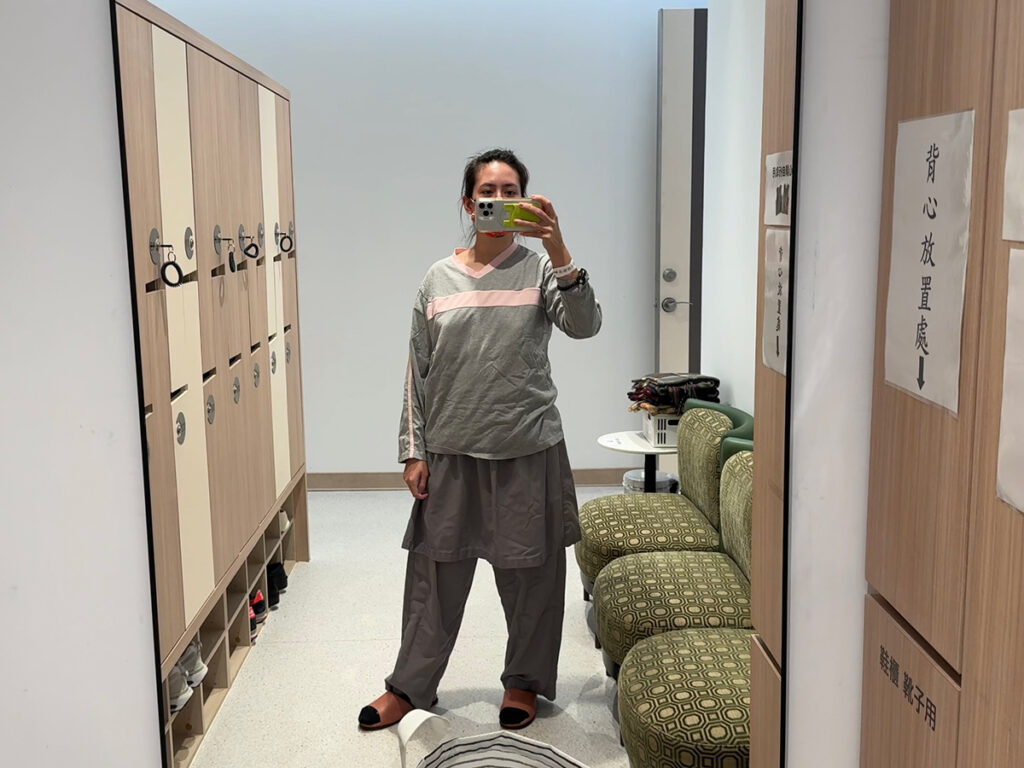
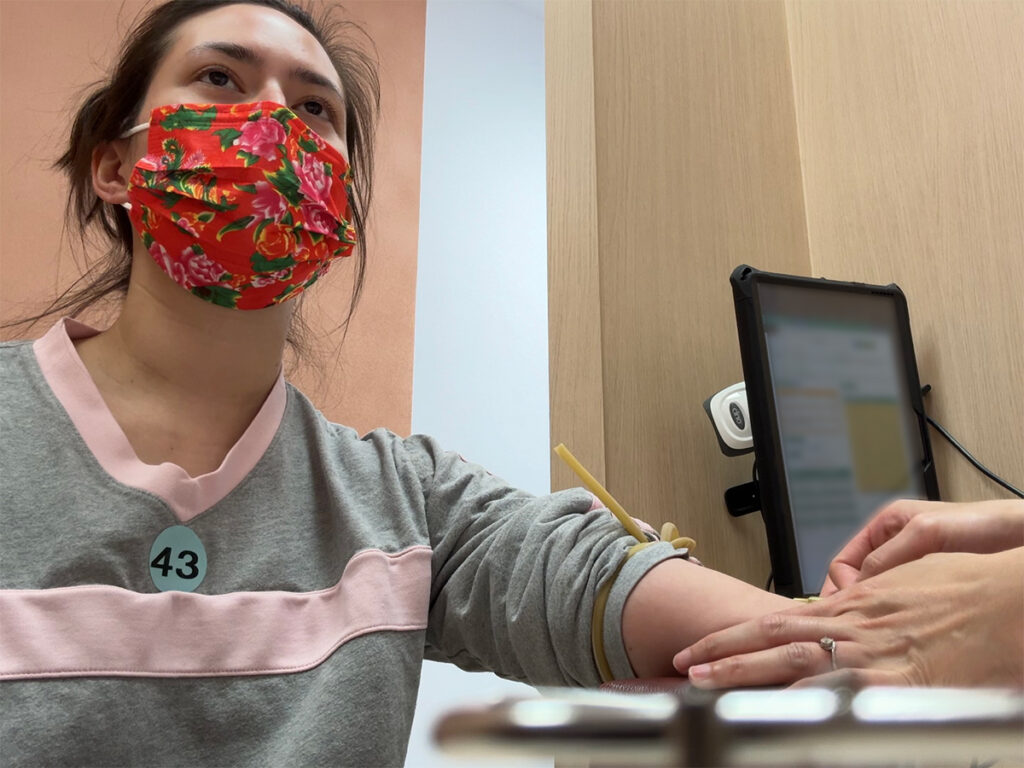
The facility I went to was clean, efficient, and comfortable. Upon arrival, the staff handed me a locker with a change of clothes, and nurses guided me from room to room. During this comprehensive physical, I completed roughly 20 tests — including bloodwork, allergy testing, ultrasounds for my organs and thyroid, a pap smear, vision and hearing tests, and more. Even with all of that, I finished everything in about an hour and a half. That level of efficiency is nonexistent in the U.S. You can also opt in for a meal afterward, which I thought was so cool. The one thing I forgot to request was a skin check — skin cancer isn’t as prevalent since Asians take great precautions to avoid the sun.
As a foreigner paying out of pocket, the comprehensive physical cost me NT$13,785, or about $425 USD. To put that in perspective, in the States you’d need to schedule multiple appointments with different specialists, and insurance often doesn’t cover many of these tests under preventative care. I received my results within two weeks, along with follow-up notes, and brought everything back to the U.S. to review with my primary care doctor.
Preventative GI Screening in Taiwan
After such a positive experience getting a physical, I decided that on my next trip, I’d be proactive and schedule a colonoscopy and endoscopy to establish a baseline for myself. The process was straightforward. They repeated some bloodwork, gave me an itemized list of procedures, and walked me through each step. Before I was sedated, I was surprised to see fentanyl included. Even though I knew it was medical grade, I’ll admit the sight of it was slightly unnerving! Before I could think too much about it, the anesthesia took effect, and the next thing I knew, the medical team was moving me to a recovery area while the sedation wore off.
During the colonoscopy, the doctor did find and removed a polyp. Before sedation, I signed off on my paperwork that if they found something to remove it. That alone vindicated why establishing a baseline was important. Imagine if I waited until I was 50 for my first screening. This reinforced that preventative care can surface things you wouldn’t otherwise know about, and it should be accessible. The total cost for both procedures, including polyp removal, was NT$17,200, or $525 USD.
I’ve had dinners cost more than that.
Non-Invasive Dermatology & Wellness Treatments I Did in Taiwan
Beyond preventative screenings, I’ve also used my time in Taiwan over multiple visits to incorporate non-invasive dermatology treatments.
Dermatology Treatments
This has included Botox and laser treatments. Taiwan doesn’t position itself as a beauty tourism destination in the way Korea does, and that distinction matters. The range of treatments is more limited, and doctors tend to take a more conservative approach, which can be a good or bad thing depending on your expectations.
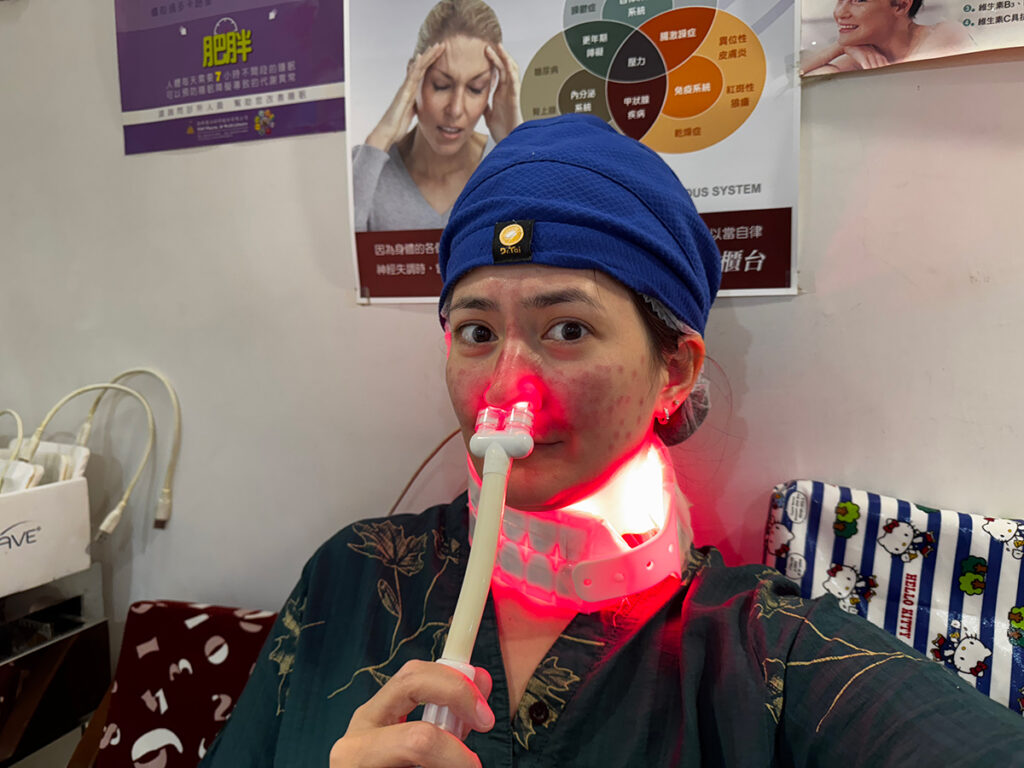
Red Light Therapy for Sinus Inflammation
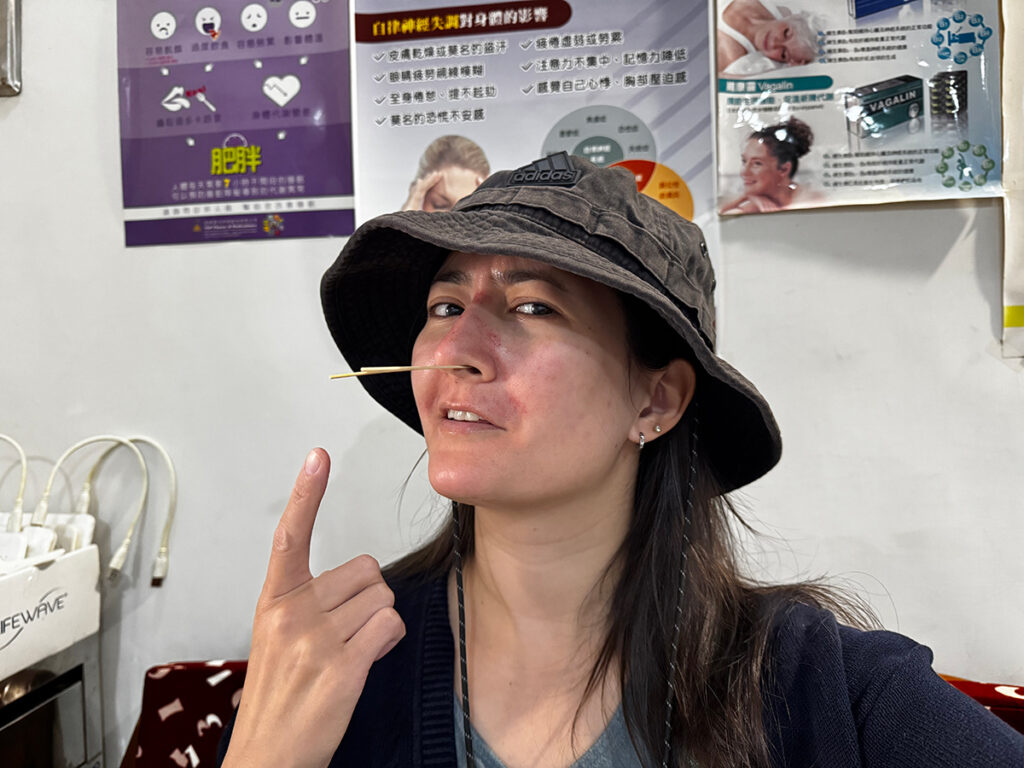
Separately from dermatology, I did red light therapy for the first time to help ease my sinus inflammation. I’m prone to sinus infections, and on one visit back to Taiwan, I was dealing with a particularly bad flare-up. During my first appointment, the doctor, a physician who emphasizes non-pharmaceutical and low-intervention treatments, stuck Q-tips up my nose until they touched the back of my throat.
It caught me off guard at first, but he explained that this is part of his baseline standard of care for sinus issues. His practice prioritizes therapies that don’t rely heavily on medication, which is why treatments like red light therapy are part of his approach.
The Real Cost of Medical Tourism vs. US Healthcare
Now, I know discussions around medical tourism can come across as privileged. Flights aren’t cheap. If you’re already traveling, or if you’re strategic about using points and miles, the math can work heavily in your favor. I use credit card points, like the Capital One Venture X and American Express Gold, to offset my airfare and accommodations. Even factoring those costs in, combining travel with medical and wellness care has saved me thousands compared to doing the same things in the U.S.
Until the U.S. healthcare system actually prioritizes preventative care and accessibility, I’m going to remain a proponent of going abroad for medical and cosmetic procedures. If this resonates with you, be sure to conduct thorough research and set realistic expectations.
FAQ: Medical & Wellness Tourism in Taiwan
Is Taiwan a good destination for medical tourism as a foreigner?
Taiwan offers a highly efficient healthcare system, but it doesn’t position itself as a medical tourism destination. As a foreigner, access depends on where you go. Clinics in major cities like Taipei are generally more accustomed to international patients, while others may require Mandarin proficiency.
How much does medical care cost in Taiwan without insurance?
Paying out of pocket as a foreigner, costs vary by clinic and procedure, but pricing is generally transparent upfront and significantly cheaper than comparable care in the U.S.
Is medical tourism in Taiwan focused on beauty treatments?
Taiwan isn’t known for beauty tourism in the way places like Korea are. Dermatology and wellness treatments exist, but options tend to be more conservative and limited.
Do doctors in Taiwan speak English?
Some do, but not all clinics offer full English-language support or translation services. For foreigners who don’t speak Mandarin, clinics in Taipei are typically the easiest place to start.
Is medical tourism in Taiwan safe?
I’m sharing my personal experience, not offering medical advice. That said, Taiwan’s healthcare system is consistently ranked among the best globally. Anyone considering care abroad should do their own research and choose providers they feel comfortable with.
Leave a Reply
is the creative studio of Erin Donahue, offering photography, videography, and content creation services for brands, hotels, tourism boards, and publications.
Based in New York City, but available globally, this multi-disciplinary digital creative left a career in the hedge fund space to pursue her passion as a travel and brand photographer, creating imagery that resonates with audiences. She approaches every project with a focus on storytelling, producing visuals that engage and inspire.
Her work has been commissioned by brands like Sony, Apple, and Google, and the content she has created has reached millions across social media.
To keep up to date with everything she shares, follow along on social media and read up on what camera gear she uses to capture the shot.
Niredonahue®