Disclosure: Some links may be affiliate links. This means that I may earn a small commission if you decide to buy (at no additional cost to you)
Last Updated on May 13, 2026 by showitadmin
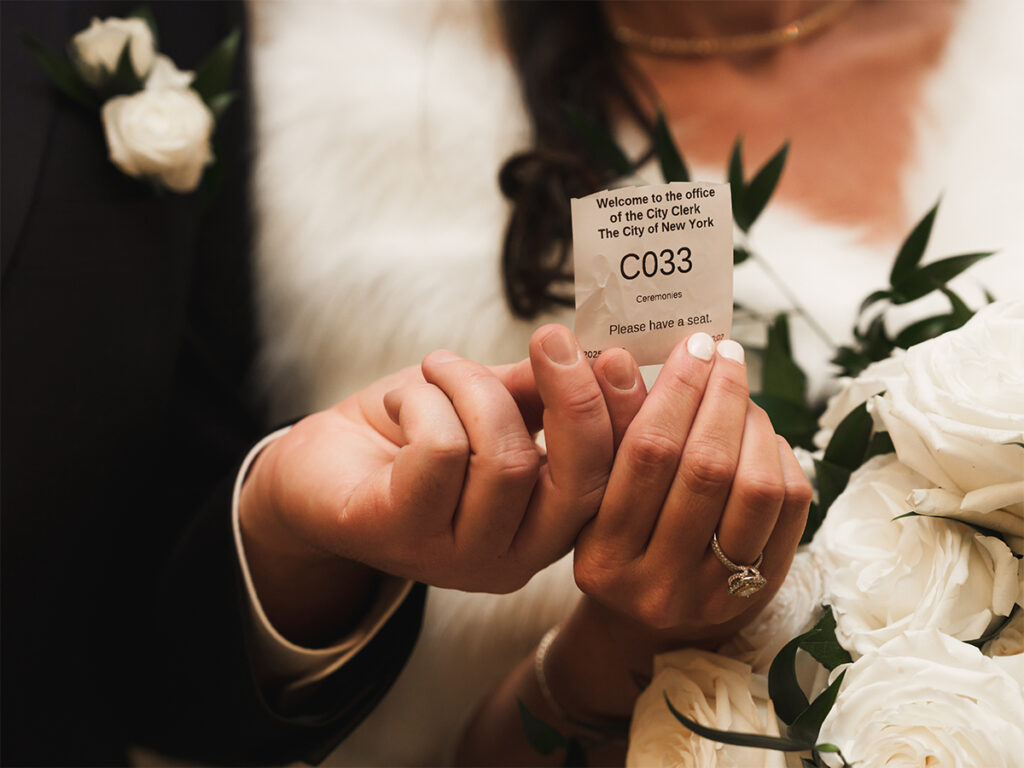
An NYC City Hall elopement is rarely about spectacle. For most couples, it’s about efficiency and getting on with the part of the day that actually feels like them. From a photography perspective, the moments can start slow, but then move fast in an instant. Every moment still matters.
I’ve documented City Hall elopements that lasted only a few minutes and others that were part of full-day events, starting at the Clerk’s Office and ending with portraits and a dinner celebration later that night. This is what the experience actually looks like, and how it unfolds from start to finish.
What an NYC City Hall Elopement Is Really Like
Most couples associate “City Hall” with the landmark building itself. In reality, marriage ceremonies take place at the City Clerk’s Office, not inside New York City Hall. The two are about a ten-minute walk apart.
City Hall elopements appeal to couples who want something simple. Many handle the legal ceremony first, then plan a larger celebration later. More and more, though, I’m finding that many skip the traditional wedding entirely due to the overinflated costs in the industry. The process is efficient by design, and the emotional moments happen quietly.
The City Clerk’s Office and the Ceremony Process
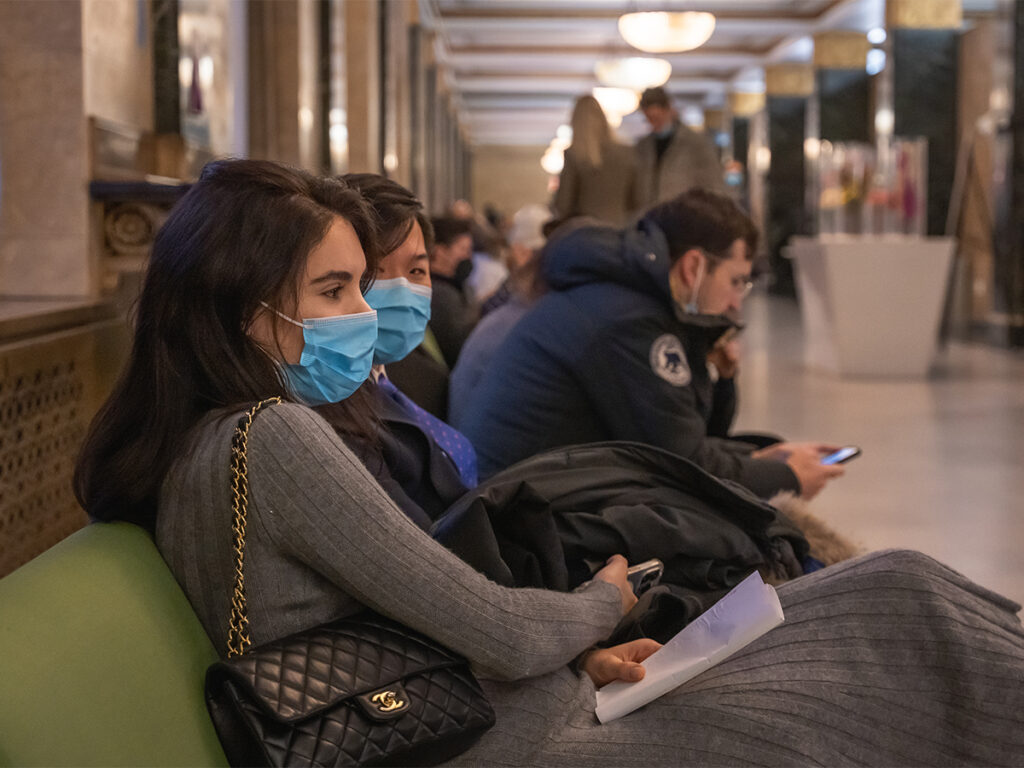
Once you arrive at the Clerk’s Office, the process is mostly administrative. Couples check in, wait their turn, and are called up when an officiant is available. Security screening is similar to what you’d expect at any government building, and photographers cannot enter until the couple with the reservation arrives.
Guest limits are enforced strictly. At the time of writing, the Clerk’s Office allows up to six guests per party. I’ve had a situation where a couple arrived with seven guests, including me, assuming it wouldn’t be an issue. However, because I was there to photograph the ceremony, security required one guest to stay outside. In that case, their grandmother ended up waiting outside security for the entire process.
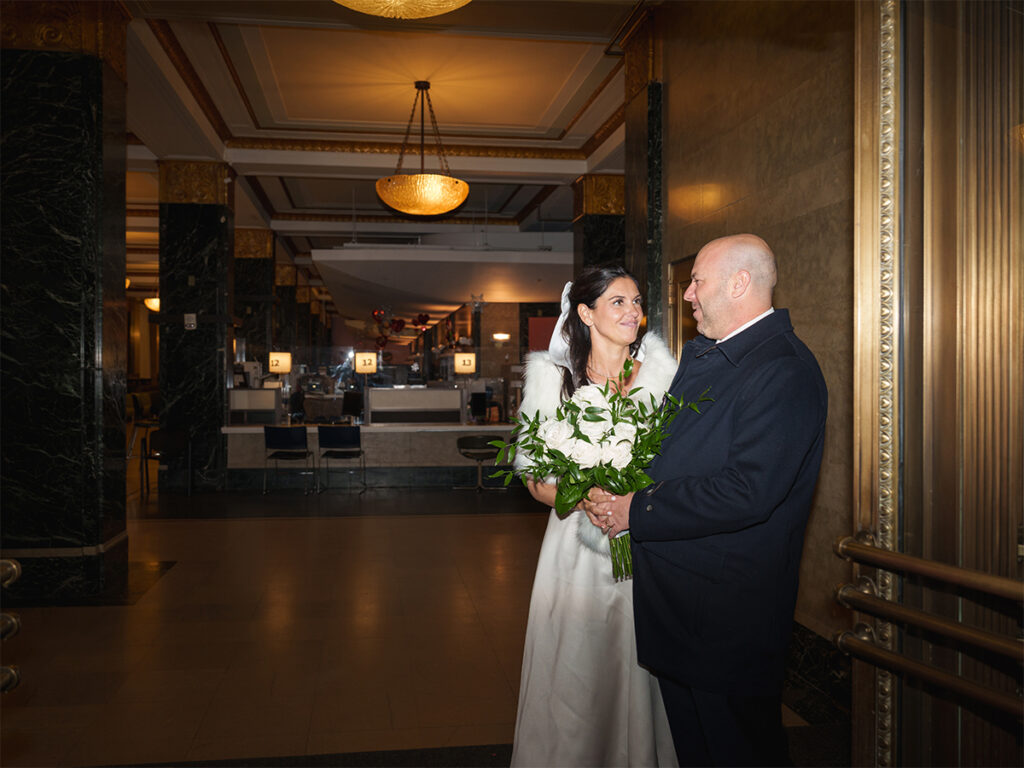
The waiting area isn’t glamorous. The lighting is flat, the green couches are kinda gross, and the atmosphere feels transactional. When the ceremony begins, things move fast. Depending on whether you have a nice or no-nonsense officiant, they don’t wait for an extended setup, and the entire exchange typically lasts about two minutes. So it’s important to be ready!
Photographing Inside the Clerk’s Office
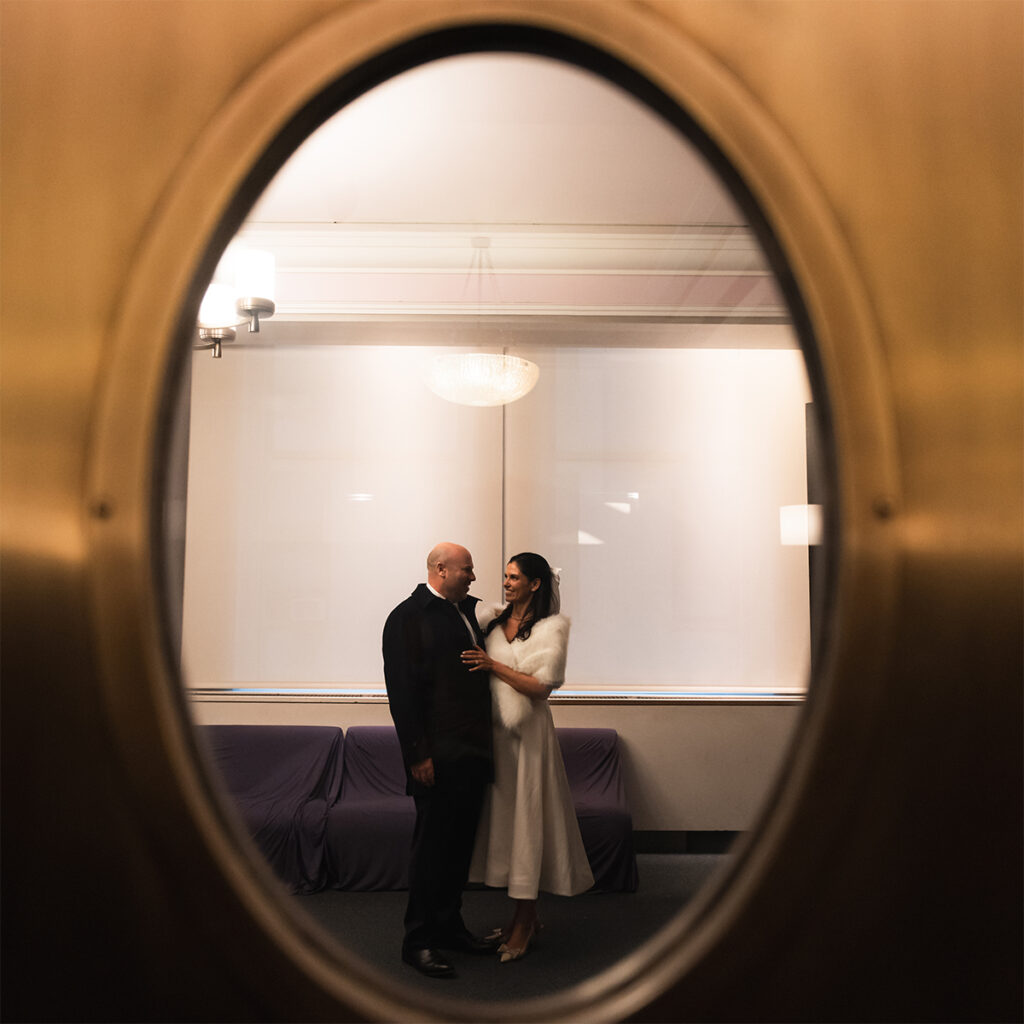
Photographing inside the Clerk’s Office requires readiness more than gear. The lighting is dim and unflattering, and movement is restricted. There’s no opportunity to ask for a redo or reposition the couple.
I approach these ceremonies with a documentary mindset. That means staying mobile and anticipating where moments will happen rather than reacting to them. Earlier on, I avoided using flash inside the ceremony rooms, but over time, I’ve become more comfortable using flash because it makes a noticeable difference. Previously, I was worried about “missing the moment,” which is why I didn’t use flash earlier, but after photographing plenty of civil ceremonies, experience takes over. A flash like the Godox TT685 or Godox iT30 Pro enables you to capture clean, well-lit images on a budget.
Candid moments matter more here than posed ones. The few seconds before the ceremony begins, the reaction immediately after it ends, and the walk out of the room are often more meaningful than the ceremony itself.
After the Ceremony: Portraits Around City Hall
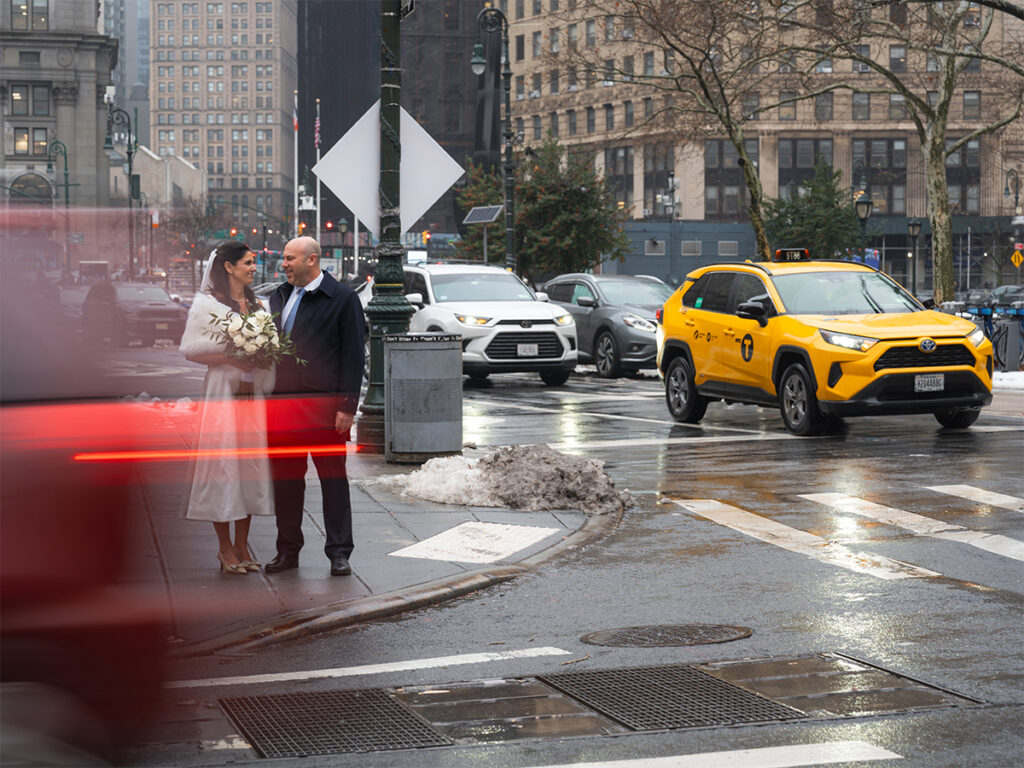
Once the ceremony is over, the next logical step is to go outside immediately. This is the opportunity to direct and photograph the couple coming out of the back entrance’s iconic yellow door. Afterwards is usually when we transition into portraits around the City Hall area, taking advantage of nearby architecture before heading elsewhere.
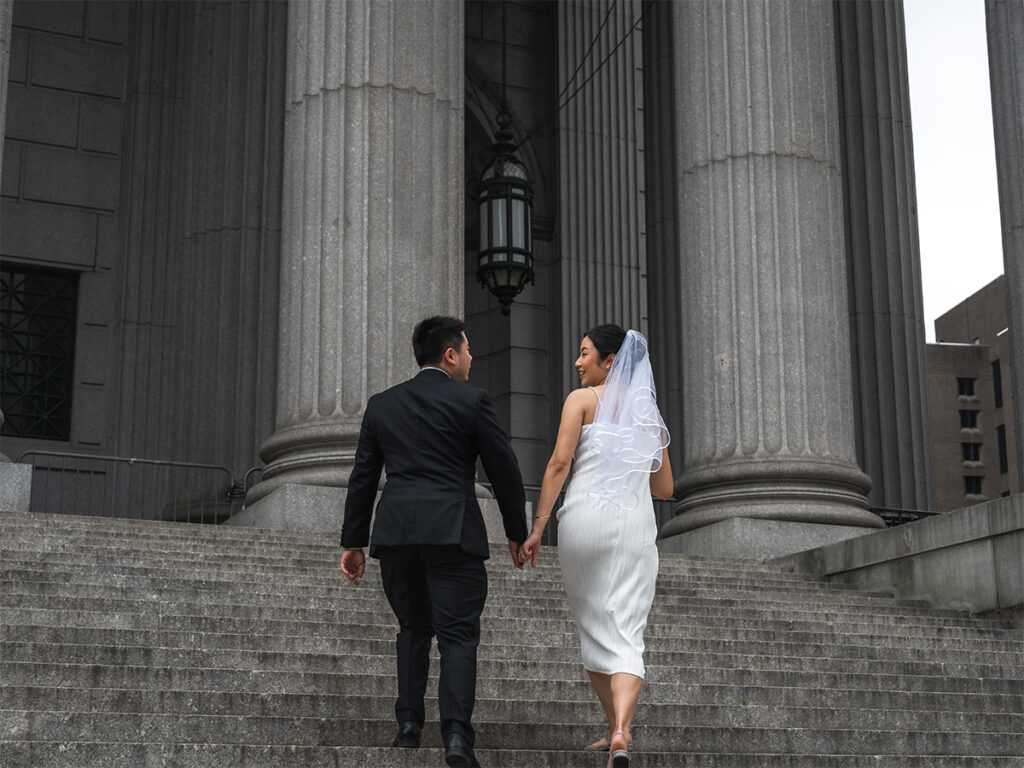
I often photograph couples on the steps of the New York County Supreme Court or the Thurgood Marshall United States Courthouse. Security is present, but on clear days, they typically allow photos on the steps of the Supreme Court. However, during bad weather like rain, they’ll decline photoshoots because the stone stairs become slippery, and it’s a liability.
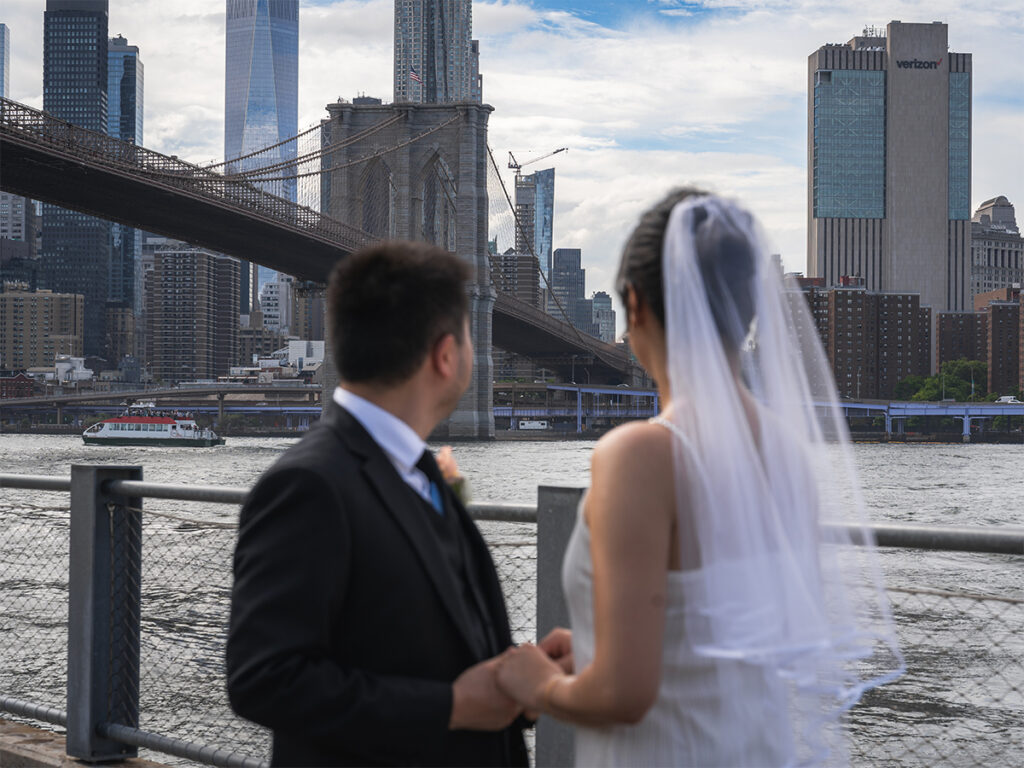
Another nearby option is the Brooklyn Bridge–City Hall municipal building entrance, which offers a recognizable New York backdrop without needing to travel far. For couples extending coverage beyond the immediate area, I’ve also photographed portraits at Brooklyn Bridge Park, where skyline views of Lower Manhattan give the day a very different feel from the courthouse setting. These portraits tend to be relaxed and straightforward. The ceremony is done, the pressure is off, and there’s space to slow things down before the day continues.
When a City Hall Elopement Becomes a Full Day
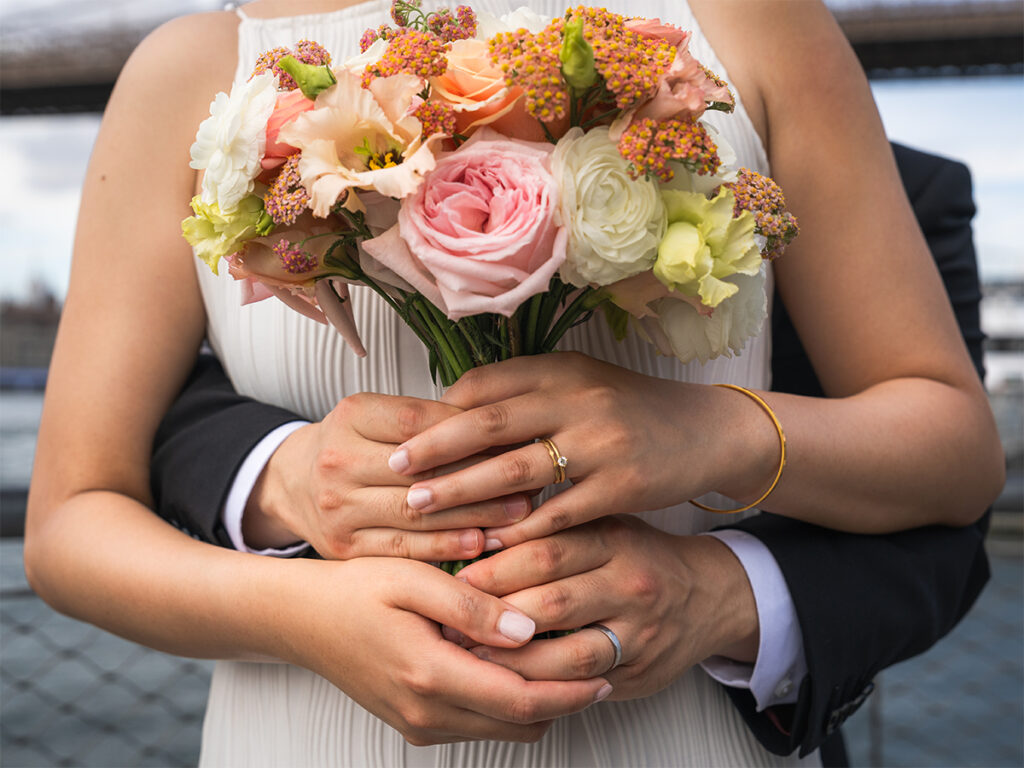
Not all City Hall elopements end at the courthouse doors. Some couples treat the civil ceremony as the starting point and build the rest of the day around portraits and a reception celebration. I’ve documented elopements that continued across multiple locations and stretched well into the evening, including dinners in neighborhoods far from City Hall.
Even when coverage expands, these days still operate differently from traditional weddings. There’s less pressure and fewer expectations. In my experience, civil ceremony clients are simply more chill. No bridezillas here. The couple just wants a practical approach to a wedding, so the focus stays on documenting the experience as it unfolds.
Reception Dinners and Post-Ceremony Celebrations
For couples who continue the day, the final stop is often a dinner with friends and family. These gatherings are usually intimate and informal, held in restaurants or private spaces rather than banquet halls. From a photography standpoint, this portion of the day shifts fully into event documentation with some directing of group photos.
Is NYC City Hall Elopement Photography Right for You?
City Hall elopements work best for couples who value simplicity and aren’t attached to tradition. The experience is quick and practical. If you want the focus to stay on the experience rather than the production, a City Hall elopement is a meaningful way to get married.
FAQ About NYC City Hall Elopement Photography
How long does an NYC City Hall ceremony take?
The ceremony itself typically lasts around two minutes. Most of the time is spent waiting before you’re called in.
How many guests are allowed at an NYC City Hall elopement?
At the time of writing, the City Clerk’s Office allows up to six guests per party, and that count includes anyone documenting the ceremony. The limit is enforced strictly, and security does not make exceptions.
Can photographers take photos inside the Clerk’s Office?
Yes, photographers are allowed, but they must enter with the couple and work within the building’s restrictions.
Is the City Clerk’s Office dark?
The lighting is dim and flat, which requires comfort when working in low-light conditions. Ideally, bring a hotshoe flash.
Do couples usually take photos after the ceremony?
Most couples step outside immediately after the ceremony for portraits around the City Hall area.
Can a City Hall elopement turn into a full-day event?
Some couples continue with portraits at additional locations and finish the day with a reception dinner.

Comments +